
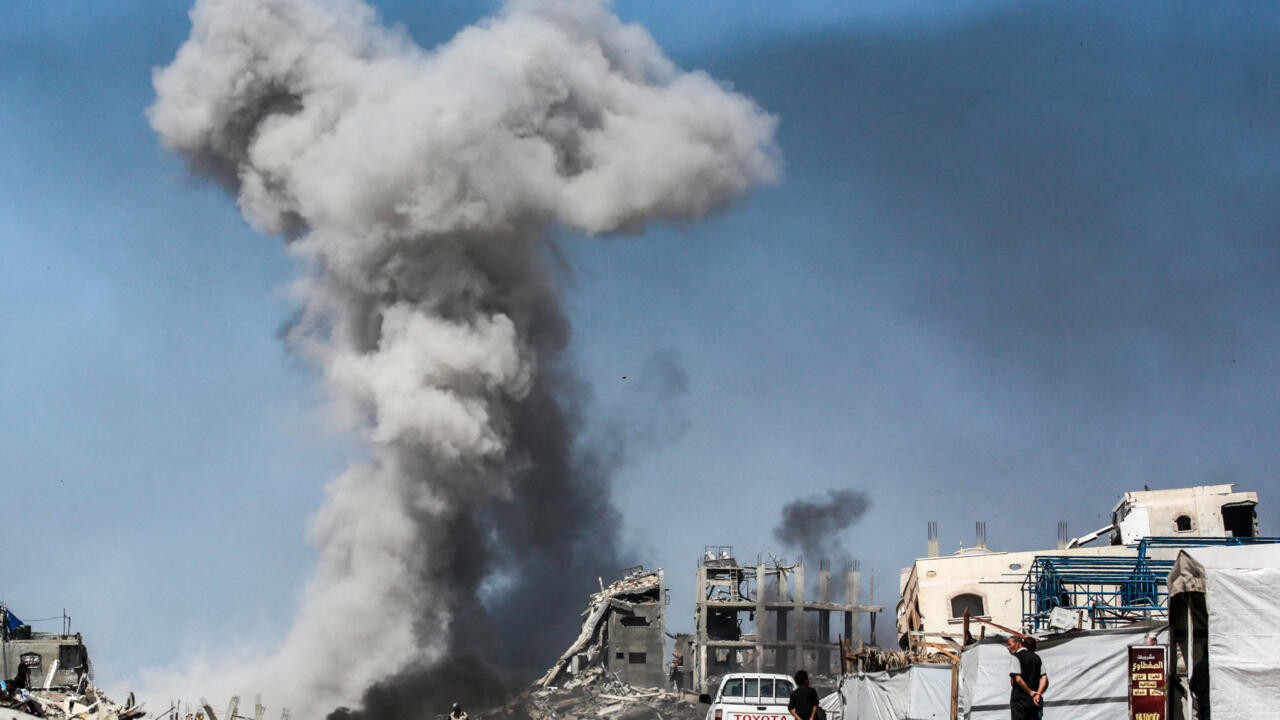

The recent Israeli strike on a school in [Location of School, if known] has resulted in the tragic loss of 25 lives, sparking international outrage and renewed calls for an immediate end to the ongoing conflict. This incident, condemned as a violation of international humanitarian law, has prompted Spain to vocally demand an end to what it describes as an “inhumane” war. The event underscores the devastating impact of the conflict on civilian populations, particularly vulnerable groups such as children, and intensifies the pressure on the international community to find a lasting resolution. This article delves into the details of the strike, the reactions from various international bodies and nations, the broader context of the conflict, and the potential pathways toward de-escalation and peace.
Details of the Israeli Strike
The Incident
On [Date of Strike], an Israeli airstrike hit a school in [Location of School, if known]. According to initial reports, the school was being used as a shelter for displaced families who had fled their homes due to the ongoing conflict. The strike resulted in the immediate deaths of 25 individuals, including children and women, and left dozens more injured.
Eyewitness Accounts
Eyewitnesses at the scene described scenes of chaos and devastation. [Quote from an eyewitness]. Rescue workers struggled to extract survivors from the rubble, while medical facilities were overwhelmed with the influx of casualties.
Conflicting Reports
Following the strike, conflicting reports emerged regarding the presence of militants at or near the school. [Report from Israeli Military]. However, these claims have been widely disputed by international observers and humanitarian organizations, who maintain that the school was primarily housing civilians.
International Reactions
Condemnation from Spain
The Spanish government has been among the most vocal in condemning the Israeli strike. [Quote from Spanish Official]. Spain has called for an immediate ceasefire and has urged the international community to take decisive action to protect civilian lives.
Responses from Other Nations
Several other nations have also expressed their condemnation of the strike. [List of countries and their statements]. Many have called for an independent investigation to determine the circumstances of the incident and to hold those responsible accountable.
Statements from International Organizations
International organizations, including the United Nations and various human rights groups, have issued strong statements condemning the strike. [Quote from UN Official]. These organizations have emphasized the need to uphold international humanitarian law and to protect civilians in conflict zones.
The Broader Context of the Conflict
Historical Background
The Israeli-Palestinian conflict has a long and complex history, dating back to the early 20th century. [Brief historical overview]. The conflict has been marked by periods of intense violence, interspersed with attempts at negotiation and peace.
Recent Escalations
In recent months, the conflict has escalated due to [Reasons for Escalation]. These events have led to increased tensions and a rise in violence, with devastating consequences for both Israelis and Palestinians.
Impact on Civilian Populations
The ongoing conflict has had a profound impact on civilian populations in both Israel and Palestine. [Details on the impact, including statistics on casualties, displacement, and economic hardship]. The situation is particularly dire in Gaza, where the majority of the population lives in poverty and faces severe restrictions on movement and access to essential services.
Legal and Ethical Considerations
International Humanitarian Law
The Israeli strike on the school raises serious questions about compliance with international humanitarian law, which prohibits attacks on civilians and civilian objects. [Explanation of relevant provisions of international humanitarian law]. The principle of proportionality requires that military actions be proportionate to the military advantage sought, and that precautions be taken to minimize harm to civilians.
Ethical Implications
The strike also raises ethical questions about the use of force in conflict zones. [Discussion of ethical considerations, including the moral responsibility to protect civilians and the potential consequences of military actions]. The incident underscores the need for all parties to the conflict to exercise restraint and to prioritize the protection of human life.
Efforts Towards De-escalation and Peace
Diplomatic Initiatives
Various diplomatic initiatives have been undertaken to try to de-escalate the conflict and to promote a peaceful resolution. [Details on diplomatic efforts, including mediation efforts, peace talks, and international conferences]. However, these efforts have so far failed to achieve a lasting breakthrough.
Role of International Mediators
International mediators, such as the United States, the European Union, and the United Nations, have played a key role in trying to facilitate negotiations between the parties. [Discussion of the role of international mediators and the challenges they face]. However, the deep-seated mistrust and animosity between the parties make it difficult to achieve progress.
Potential Pathways to Peace
Several potential pathways to peace have been proposed, including [List of potential pathways to peace, such as a two-state solution, a one-state solution, and regional peace initiatives]. However, each of these options faces significant obstacles and would require a willingness to compromise on the part of all parties.
Conclusion
The Israeli strike on the school, resulting in the deaths of 25 individuals, has sparked international outrage and intensified calls for an end to the “inhumane” war. The incident underscores the urgent need for a comprehensive and lasting resolution to the conflict, one that addresses the root causes of the violence and ensures the protection of civilian populations. While the path to peace is fraught with challenges, the international community must redouble its efforts to promote dialogue, to uphold international law, and to create a future in which both Israelis and Palestinians can live in peace and security.
Call to Action
We urge all parties to the conflict to immediately cease hostilities and to engage in meaningful negotiations towards a peaceful resolution. [Specific actions for readers to take, such as contacting elected officials, supporting humanitarian organizations, and raising awareness about the conflict]. Together, we can work towards a future in which such tragedies are no longer repeated.
[Internal Link to related article] [External Link to a relevant news source]




Leave a Reply